Whitepaper
Closing the Maternal Care Gap
How health systems use remote monitoring and nurse-led care management to catch postpartum hypertension earlier and extend obstetric care to rural mothers.

Maternal risk peaks after patients go home
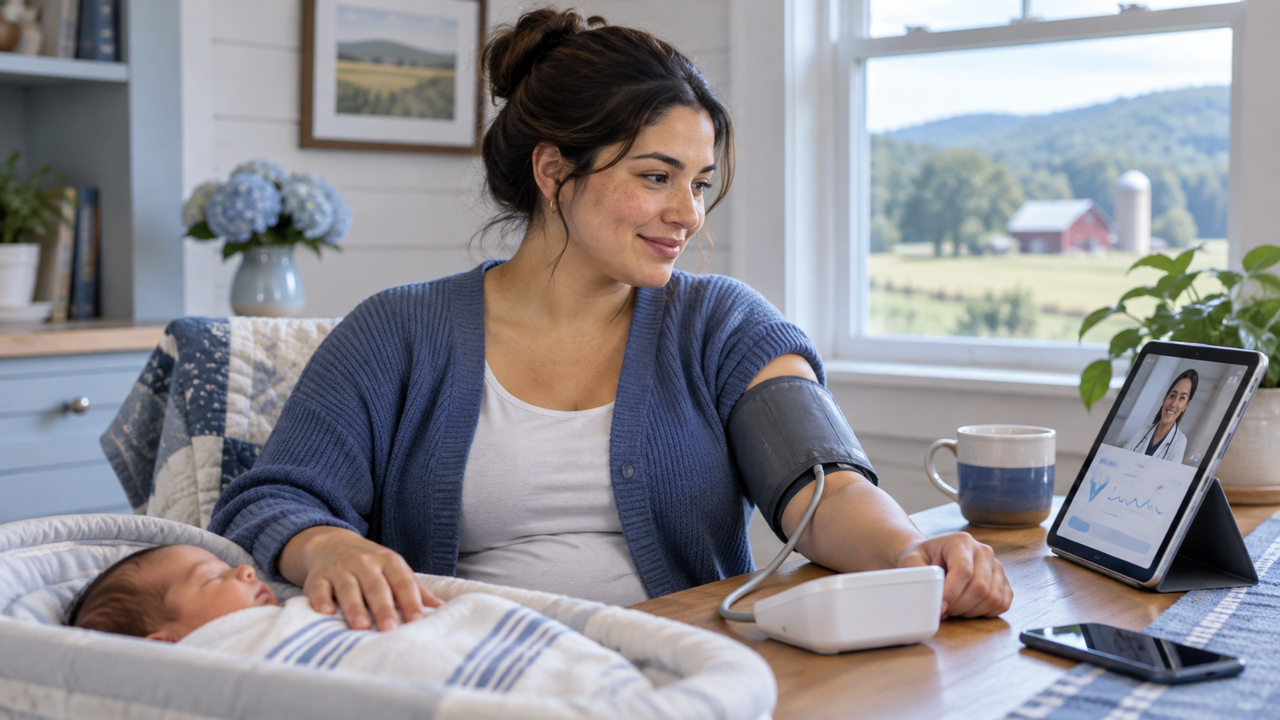
More than 80% of pregnancy-related deaths in the United States are preventable, and 53% occur between one week and one year after delivery. Postpartum blood pressure often rises again days after discharge. As many as 40% of women miss their postpartum visit, and more than half of rural hospitals no longer deliver babies.
This whitepaper lays out the evidence, the care model, and the funding plan to extend your obstetric team into the home across pregnancy and the postpartum period.
Outcomes:
- 33.5% to 84.0%: first postpartum BP check attendance at UChicago Medicine
- 50,000+: high-risk maternal patients monitored across HRS programs
- 20+: maternal health RPM programs supported by HRS
Inside the whitepaper:
- What the research shows for postpartum blood pressure monitoring, glucose monitoring, and CGM in pregnancy, and where results are mixed
- How UChicago Medicine raised first postpartum blood pressure check attendance from 33.5% to 84.0%, plus results from Novant Health, Boston Medical Center, and Evara Health
- A four-pathway care model and escalation model your OB and MFM teams can adopt
- Program design for patients without broadband, a smartphone, or a nearby delivering hospital
- The states naming maternal monitoring in their RHTP plans, and how to sustain programs through Medicaid, commercial, and value-based funding
Who it’s for: CMOs, CNOs, women’s health and OB leaders, population health teams, and rural health and RHTP grant applicants.
Download the Whitepaper
Access Your Free Whitepaper
You Might Also Like
Chronic Disease Management and RPM: Improving Patient Outcomes